Appleton art teacher, Elyse Lucas collaborated with Kate Mothes of Young Space inspires high school art students to research, collaborate, and design their own gallery. Mr. Juarez’s 365 Artists 365 Days Project provided students with a list of artists whose works were explored for the curation of the exhibitions that were organized within their own galleries.
It is such a rewarding experience to see this project inspire students to look at the [art] world through a different lens. When this project was released on January 1, 2014 the primary intent was to introduce our readership to contemporary artists, studio cultures, and diversity in media from across the globe. It is neat to see this project implemented within a secondary art curriculum and to see the possibilities unfold. – Mr. Juarez, art educator and founder of 365 Artists 365 Days Project.
________________________________________________________________________________
Ms. Elyse Lucas’s unit: Design it Yourself Gallery Project
Unit and images courtesy of the teacher and used with permission.
Objective: Design your own art exhibition in your own imaginary gallery. The artwork and gallery space must work together to invoke a common theme. Students may select any contemporary art pieces from the list of contemporary artists on Frank Juarez “365 Artists in 365 days” website. Students may design any space that the artwork will be hung. Student will create 3D models of their gallery space as well as an exhibition guide showcasing their selected artwork and describing their theme. Student will then present their ideas to professional curator Kate Mothes. Student will gain a greater understanding of contemporary art, art appreciation, art criticism, and the value to art in a community.
Requirements:
Research on Artwork –
- Select 8-12 pieces of contemporary art from Frank Juarez’s website “365 Artists in 365 Days”
- Artwork must have common theme (aesthetically or message)
- Describe artist’s intent with artwork (chart)
3D Model of Gallery –
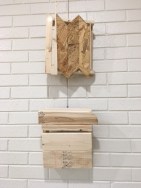
- Must be made out of cardboard
- Must be 3D and painted white
- Must be laid out with where artwork goes and why
Exhibition guide for show –
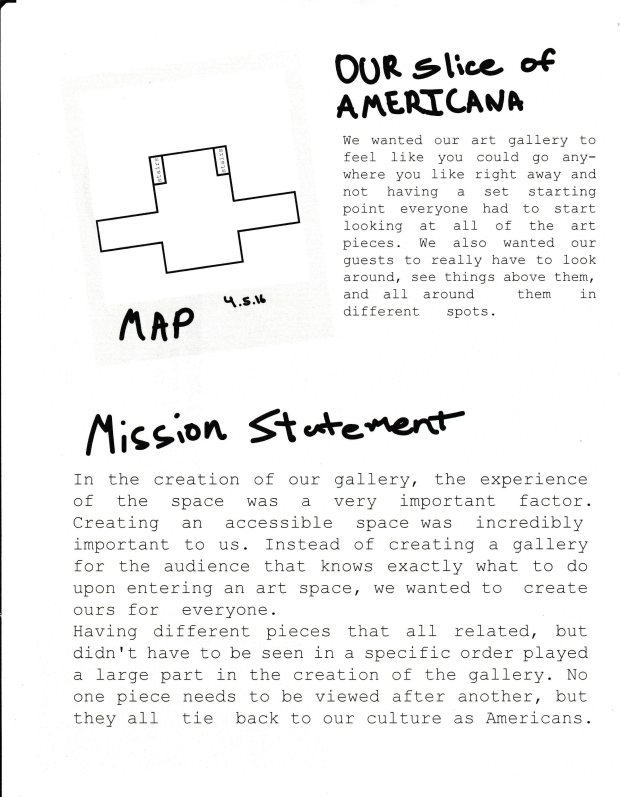
- Must include mission statement about the show (intent or what message you want the viewer to observe)
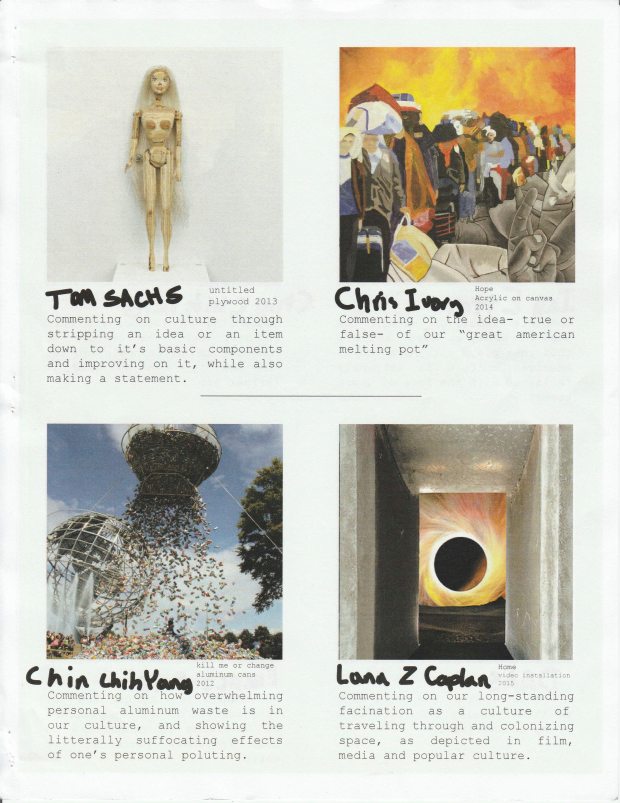
- Paragraph about each artist and description of their artwork
Presentation –
- About 20 minutes long
- Re-state mission statement and intent with the show
- Explain why you designed the space in a certain shape
- Explain why you hung artwork in certain spots
- Explain what you learned through this process
Standards:
- Art Theory: Visual Thinking : Vocabulary Use (id:9968)
- Art Theory: Visual Thinking : Interpretation/Evaluation (id:9969)
- Art Theory: Visual Thinking : Formulates Opinion (id:9971)
- Art Theory: Visual Thinking : Personal Opinion (id:9974)
- Communication Arts 9. : Key Ideas and Details 2 (id:10151)
- Communication Arts 9. : Production and Distribution of Writing 2 (id:10167)
- Communication Arts 9. : Presentation of Knowledge and Ideas 3 (id:10177)
________________________________________________________________________________
Design it yourself Art Gallery: Research
Directions: Visit Frank Juarez’s website “365artists365days.com.” Click on the “Artist Database” link at the top and then “Download 2014/5 Artist Database” link. You can choose to look up an artist based on their medium (materials they used to make art) or theme/category they fall under. Visit the artist’s website, find images of their work, read about their intent/process. If you like an artist or think it works with a theme, add information to the chart below. Explore all sorts of artists, themes and mediums until you find one you appreciate/find aesthetic connection to. Collect 8-12 pieces for your show and print thumbnail picture of each piece.

Design it yourself Art Gallery: Research
Post-Research Reflection: Respond to the following prompts thoughtfully and thoroughly. Based on your reflection, write your show’s “Mission Statement” below.
- What is similar about all these artists?
- What mediums are the works made of? Where are the artists from?
- What overall theme does the artwork have (aesthetics or meaning)?
- Why will these works make a unified show?
- What do you hope the viewer will take away from visiting your show?
- What did you learn about your own aesthetics/taste in art through this research process?
________________________________________________________________________________
DIY Gallery: Community Engagement Piece
Directions: Design a community engagement piece to accompany your exhibition. What is something that will greet the public and encourage them to have a voice about your art show’s theme? Engagement piece should be something interactive that either remains in the gallery or people can take with them. Be creative and build off of your theme!
Requirements:
- Piece should relate to the theme of your art show
- Piece should be interactive
- Prompt people to participate (see/feel the impact)
- Remain in space or people take with them (memory)
- Quick activity (less than five minutes)
- Minimal supplies/mess
Ideas to build off of and adapt to your show:
- Writing prompt (Kate’s show)
- Collaborative drawing (Tedx talk)
- Collaborative sticky notes mural (Tedx talk)
- Take away card/gift/message (Felix Gonzalez Torres)
- Be Creative!!! Think of your own!!!
Describe your community engagement piece below:
- Describe the activity in 5-7 sentences (include a sketch as necessary)
- What do you want people to take away from the activity?
- What materials are necessary to the activity?
- How does the activity relate to your theme?
Describe your community engagement piece below:
- Describe the activity in 5-7 sentences (include a sketch as necessary)
- What do you want people to take away from the activity?
- What materials are necessary to the activity?
- How does the activity relate to your theme?
________________________________________________________________________________
Design it yourself Gallery: Exhibition Guide
Directions: Create your own exhibition guide for your art show. Exhibition guide should walk your viewers through your art show and provide them with necessary information so they understand your theme/message of the show and layout of your gallery. Students may use Indesign or Publisher to create their 2-3 page guidebook.
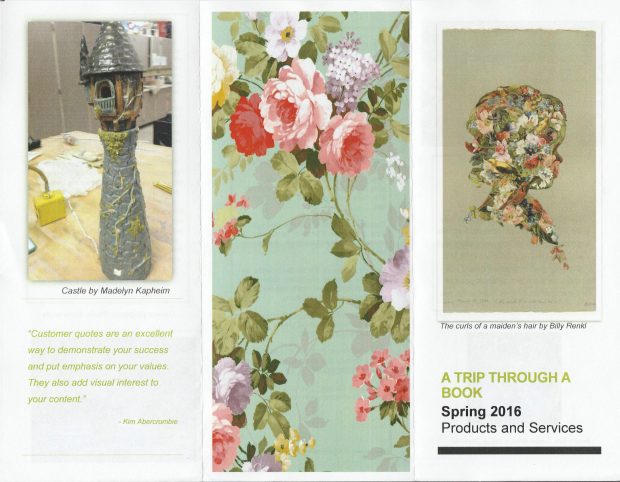

Requirements:
Exhibition guide with likely be a trifold or booklet and must include the following:
Title/Cover Page:
- Title of your gallery
- Title of your art show
- Picture (one attractive piece of artwork that represents the show)
Information about the show:
- Location (imaginary location-city, state)
- Run time (imaginary dates-2 weeks, 2 months, other)
- Mission statement of show
- Map of the gallery/digital Homestyler.com model
Information about the art:
- Artist, Title, Date, Medium of every piece of art in show
- Small paragraph/blurb about each artist and their piece
- Selective photos of work (not for every piece but range of work)
Information about your gallery:
- Who are the curators (that’s you!)
- Why did you choose to design your gallery the way you did?
- What future shows would you like to hold in your gallery?
Note: Please use an attractive layout, font, colors and visuals that all work with your art show’s theme and is inviting to the public.


________________________________________________________________________________
DIY Gallery: Model
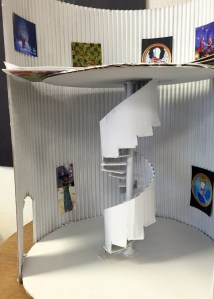 Objective: Design a model of your gallery space that help articulates your gallery’s mission statement and showcases the selected artwork. One model should be completed digitally with http://www.homestyler.com. You will need to create an account with your school email for this site. One model should be 3D and made out of cardboard. Students should paint cardboard white and include a key for the model explaining where artwork will go. Research other art galleries and museums and consider their layout when designing your own. Consider traditional elements of a gallery including blank slate layout (white walls, wood floors, artwork as focal point). Consider sizing of artwork when planning what pieces go where (an instillation piece should have adequate space for viewer to walk around piece, 6ft painting will need larger wall so work has space, etc.)
Requirements:
- 1 Model should be made digitally with homestyler.com
- 1 Model should be constructed 3D
- Made out of cardboard and hot glue
- Painted white walls
- Clear simple layout (complements the art)
- Considerate arrangement of work (pieces thematically tell story)
- Artwork sizing considered
- Key/chart:
- indication where artwork is hung
- compass/label for bearings
- title of the gallery
- mission statement of gallery
- thumbnail picture of art pieces (8-12)
- statement explaining gallery design and layout (why pieces go where)
DIY Gallery: Model statement
Explain your thought process is designing the gallery space. Why did you choose this layout? How does the layout relate to your gallery’s mission statement and theme of the art show? What other art galleries/museums did you look at for inspiration for your gallery? What pieces needed extra consideration for placement? (7-9 sentences at least)
________________________________________________________________________________
Design it yourself Gallery: Presentation
Directions: Pitch your gallery idea to Kate Mothes and Ms. Lucas! Presentation should be 15 mins in length and both partners should be actively participating equally. Discuss all components to your gallery including the following: information about the show, art pieces/research process, exhibition guide, layout (digital and scale model), community engagement piece.
Information on show: (3 mins)
- Title of gallery and exhibition
- Mission statement
- Theme of the exhibition
- Describe artists and their pieces (artist, title, date, medium, meaning)
Research process: (3 mins)
- Why did you pick the pieces you did?
- What were some hardships with finding your artists?
- Why were you drawn to the pieces?
- What did you learn about your own taste in art through this process?
Exhibition Guide: (3 mins)
- Why did you design your guide this way?
- What hardships did you have when creating your guide?


Layout of gallery (models): (3 mins)
- Why did you arrange your model/gallery layout this way?
- What hardships did you overcome in planning out the location of your pieces or what special considerations did your artwork require?

Community Engagement: (3 mins)
- What activity did you provide the public?
- What are you hoping people take away from participating in activity?
- How does your activity relate to your theme?
- Why is it important to have a community engagement piece?
*** Note: This is a formal presentation. Please introduce yourself and conduct yourself professionally in front of our community members. Please rehearse your presentation with your partner in advanced so you meet time and response expectations. Please hold up/display model and guide when describing these pieces. Can provide powerpoint of enlarged images when describing art pieces if desired.
Presentation Feedback (see front of this sheet also):
________________________________________________________________________________
________________________________________________________________________________
________________________________________________________________________________
________________________________________________________________________________
________________________________________________________________________________
Project Feedback (see individual sheets also):
________________________________________________________________________________
________________________________________________________________________________
________________________________________________________________________________
________________________________________________________________________________
________________________________________________________________________________
Unit and images courtesy of the teacher and used with permission.
Below is the article that was published on April 11, 2016 by The Post Crescent.









 nhsartdept.com